

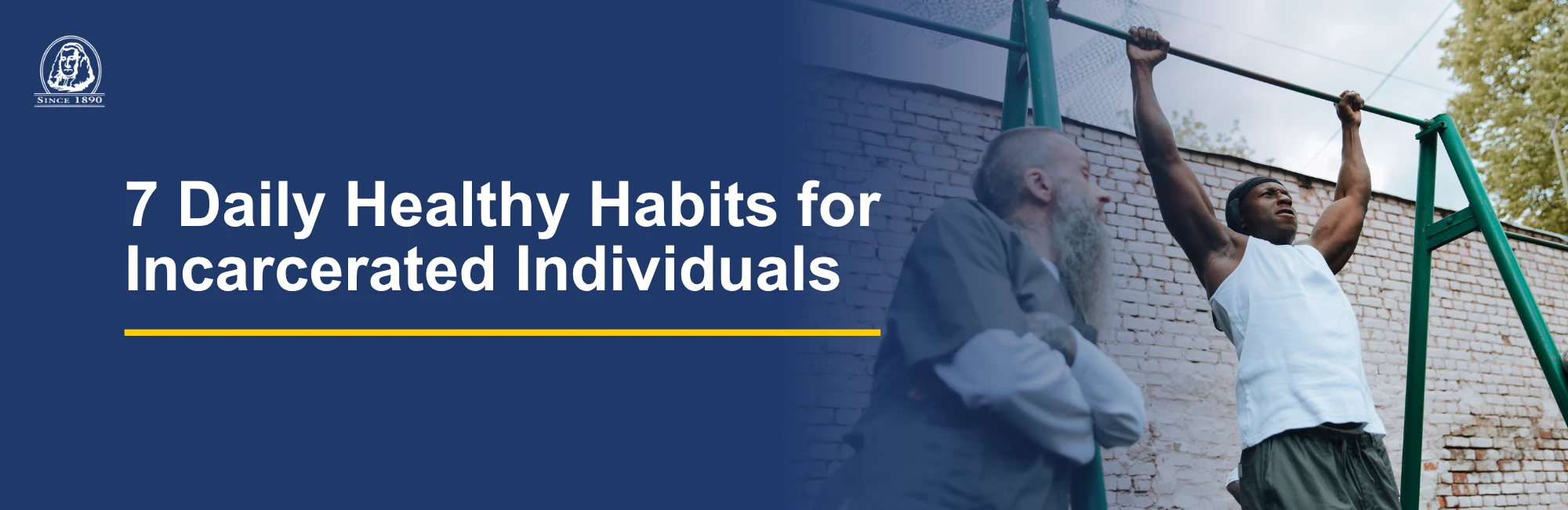
7 Daily Healthy Habits for Incarcerated Individuals
Developing healthy habits and choices can change the outlook of your life even as an incarcerated individual. Your life still matters and has purpose, and it all starts with finding ways to stay active and achieve new goals.
With limited resources, it may feel challenging to implement new habits, but this is where creativity and innovation come in and leave you discovering fresh ways to fill your days.
Nothing is ever wasted, and these seven healthy habits will help you make the most of your time as an incarcerated individual.
Here’s how you can get started.
Engage in Physical Exercise While In Prison
You can support your body by getting up and moving around each day. And the best part is that there are countless variations for your workouts.
Using your own body weight for an effective workout helps you build strength and endurance with your own muscle mass. There’s no need for extra equipment either. The key is to start simple and work your way up to more intense workouts.
30 minutes of moderate exercise at least five days a week is one way to take care of your body physically. When you discipline yourself to make this healthy habit a regular occurrence, you are positioning your body to have an easier time sleeping and managing weight, blood pressure, and cholesterol levels.
The benefits don’t stop there and even extend to supporting your mental health. When you work out, you release endorphins that help eliminate stress, improve your mood, and make you feel better.
These six simple exercises can shift your trajectory to a healthier, happier lifestyle.
- Push ups
- Squats
- Pull ups
- Jumping jacks
- Burpees
- Lunges
Once you master reps on these moves, you can transition to other ones such as jumping jacks or jogging. Don’t forget to stretch before and after a workout–you’ll find this is key to a successful exercise regimen.
Make Healthier Eating Choices
As you spend time exercising, you also need to support your body with nutrition that will sustain you for a healthier physical life. Making healthier eating choices is not impossible as an incarcerated individual either (although sometimes you are limited by what is offered to you).
One incarcerated man, Michael Deforge, shares his experience toward a more sustainable and fruitful life by simply changing his diet.
Here are the takeaways to help you make progress:
- Eat real foods that are not processed (i.e. fruits, veggies, meat, and beans).
- These foods are known for their antioxidant properties that help support an anti-inflammatory, antidiabetic, anticancer, and cardiovascular protected life. Real food also has increased nutrients like vitamins and minerals that your body needs.
- Avoid processed foods (i.e. cakes, cookies, sugar, additives).
- These food choices can cause inflammation and potentially lead to other health complications.
- Minimize consumption of starches (i.e. rice, potatoes, breads).
- Again, these foods can increase inflammation and spike glucose because of how they are broken down in your body.
The next time you’re in the food line, take a minute to assess any options available to you.
Practice Gratefulness
No one is exempt from life’s challenges, and if you’re not careful, it can be easy to focus on the negative parts of your day, month, or year as an incarcerated individual. However, you can still be intentional with each moment of your day and practice gratitude.
When you wake up in the morning, taking time to write out 10 things you are thankful for can set your day on a positive trajectory. You are training yourself to find purpose and thankfulness. In the process, your brain learns to focus on this mindset more regularly.
From a scientific perspective, practicing gratitude is a healthy habit that can help treat anxiety and depression, increase positive mental health, and boost your mood and emotions. Using this technique now will help you find a glimpse of joy in the moments when life feels heavy.
Reflect on the Day
Gratitude and reflection can go hand in hand as healthy habits that change your thoughts, attitude, and speech. You can bookend your days with these two practices: start your day with gratitude and end your day with reflection and introspection.
There’s no right or wrong way to reflect on the day, but if you need some ideas to get started, here are some prompts.
- What did you do during your day?
- What went well?
- What do you want to improve on?
- What challenged you?
- What discouraged you?
- What is motivating you right now?
- How can you increase your motivation?
- What do you hope to accomplish tomorrow, this week, or next month?
When you choose to write down the answers to these questions, you clear up space in your mind so you’re not overthinking events of the day. You also give yourself the ability to follow life’s journey and look back weeks, months, or years later to see the patterns of growth you’ve had over time!
And if those personal incentives aren’t enough, choosing to incorporate this healthy habit is known to improve your memory and strengthen problem-solving skills.
Read to Keep Your Brain Sharp
The benefits of reading make this healthy habit a vital discipline for the long term. Whether you enjoy nonfiction or fiction, there are options for you, and the benefits will serve you well.
Reading has been shown to help alleviate stress and anxiety because it’s an emotional release. You enter a new world of characters or information that allows you to disengage from real life for a few minutes while learning something interesting along the way. You also grow your vocabulary and can empathize with people’s feelings and emotions better because of what you read.
Scientifically, reading increases the gray matter in your brain, which directly affects cognitive function and keeps your mind sharp and alert.
For nonfiction recommendations, visit Blackstone’s bookstore, and for fiction recommendations, visit Goodreads.
Use Communication Strategies
Clarity is kindness, and communication provides clarity. When having a conversation with anyone, it’s important to make sure you ask questions, explain yourself, and listen. Even when frustrations arise, there are ways to express how you’re feeling in an effective way.
Here are some ways to consider how to best engage in a conversation and communicate clearly.
- Is this respectful?
- Is this good timing?
- Am I listening?
- Am I being clear?
- Am I maintaining composure and keeping my emotions in check?
The more you practice these techniques, the easier it will be to implement this healthy habit, and it will avoid unnecessary stress.
Stay Connected
Everyone needs community, and knowing you have people in your corner who are supporting and encouraging you goes a long way in staying motivated as an incarcerated individual who is working to implement healthy habits. Your community can cheer you on in developing these healthy habits.
The more you are able to communicate with family and friends, via letters, phone calls or personal visits, the more you will be able to update them on your progress and know you have accountability to follow through on your goals. And in the process, you will be able to hear how those you care about are doing too!
Love and support come in many forms and can be through words of affirmation, encouragement, and motivation. Continual communication will help you feel connected to those you love and help you see their growth as much as your own over the years.
Written by Laura Conaway