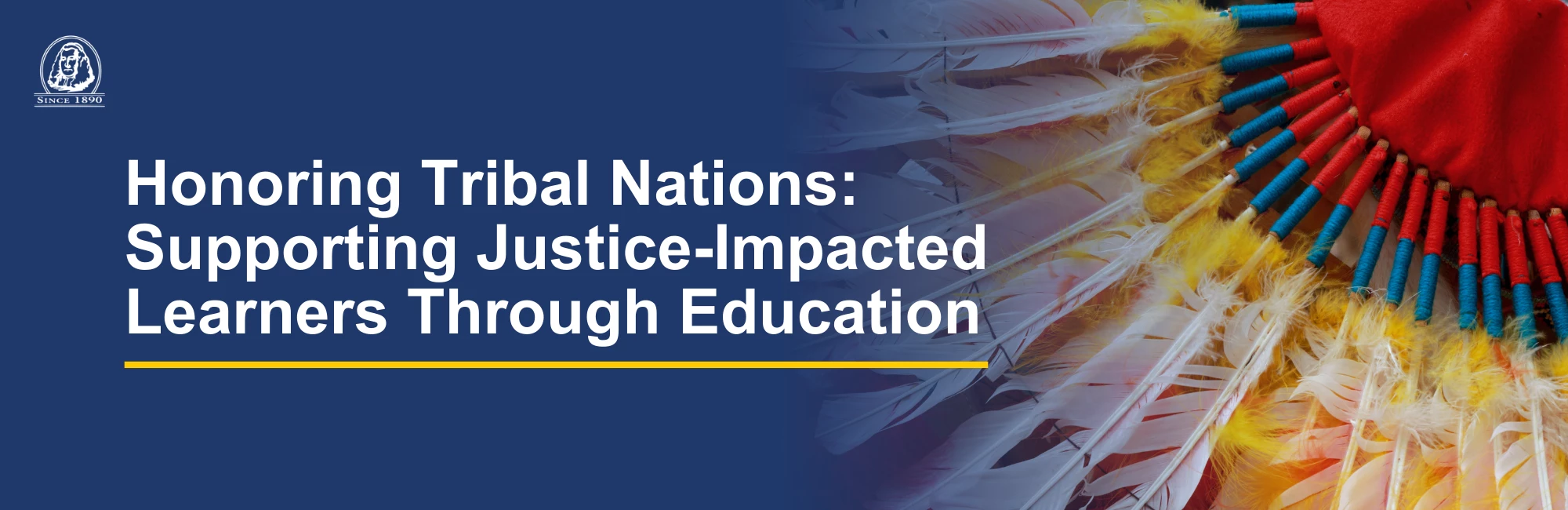
Honoring Tribal Nations: Supporting Justice-Impacted Learners Through Education
Incarceration disproportionately affects Native Americans with a recidivism rate of 45.3% compared to 32% for the general population. This disparity is influenced by a variety of historical factors, including displacement, broken treaties, and policies that created generational trauma and economic hardship for Native communities.
Despite these challenges, tribal nations are leading efforts to break the cycle of incarceration. Through education, workforce development, and reentry support, tribes are empowering justice-impacted individuals to pursue self-sufficiency, healing, and long-term success – while honoring their culture and history.
What is a Tribal Nation?
American Indians are citizens of their state and country, as well as citizens of their tribe. There are 574 federally-recognized tribes in the United States. Tribes were formally recognized as sovereign nations through treaties with the U.S. federal government.
Tribal nations operate within a government-to-government relationship with the U.S. federal government and maintain the right to self-govern. This relationship is similar to that between state governments and the federal government with only Congress holding authority above tribal governance.
Tribal Scholarships for Justice-Impacted Individuals
Tribal nations provide a variety of services to their members, including initiatives to foster learning. Tribal Education Departments often offer scholarships for higher education and vocational training. In some cases, these scholarships are extended to incarcerated students – though this is not the case with every tribe.
Below are examples of tribal nations actively supporting justice-impacted learners through education.
The Citizen Potawatomi Nation
The Citizen Potawatomi Nation (CPN) offers vocational scholarships to eligible citizens through its Workforce Development & Social Services Department. In 2018, the scholarship was extended to incarcerated students. To read the eligibility requirements for incarcerated students, click here.
In addition to their scholarship program, CPN Workforce & Social Services also assisted the formerly incarcerated through a Tribal Re-entry Program. Over six years, fewer than five of nearly 350 program participants returned to incarceration – an extraordinary success rate.
In a 2018 article, program coordinator Burt Patadal emphasizes Native American values of reciprocity and self-sufficiency, sharing his goal:
“I don’t ever want them to go back there, and I want them to know about being an Indian.”
The Mi’kmaq Nation
The Mi’kmaq Nation Education Department aids a variety of students to succeed in their educational goals. The department provides educational training and services to incarcerated adults in the tribal nation through its Adult Education Program.
The Senaca-Cayuga Nation
The Senaca-Cayuga Nation Education Department offers the Education Scholarship Fund which provides up to $2,500 to eligible tribal members. This funding is available to incarcerated students, reinforcing the tribe’s commitment to second chances through education.
The Salt River Pima-Maricopa Indian Community
The Salt River Pima-Maricopa Indian Community (SRPMIC) is a tribal nation located in Arizona. Their Education Department aids tribal members in pursuing higher learning through the Salt River Higher Education Program. This comprehensive initiative provides personalized advising and assistance with financial aid and scholarships.
As part of the Salt River Higher Education Program, scholarships are offered for eligible tribal members pursuing college or vocational training. Thanks to a partnership with Rio Salado Community College, tribal members can pursue correspondence-based postsecondary education and receive educational funding through the Salt River Higher Education Program. The program works together with the college and SRPMIC’s Department of Corrections to ensure continued academic support.
Anthony’s Story
Anthony Carlos earned his Workforce Development Certificate through the Rio Salado College Incarcerated Re-Entry program, becoming the sixth participant to earn a certificate since the program’s revitalization in 2016.
At his graduation ceremony, staff from the Department of Corrections, higher education program, and Rio Salado attended in support. Anthony received a stole embroidered with the O’odham phrase meaning “We will do this together” – a powerful symbol of community collaboration.
Sarabeth’s Story
Sarabeth Kaye, a tribal member and mother of two, earned both her GED and associate degree during her four years of incarceration. Inspired by her own struggles with addiction, she pursued a degree in Addictions and Substance Use Disorders (ASD).
Her education was fully funded through the Salt River Schools Higher Education Program. On her final day of incarceration, a celebration was held in her honor, and she was gifted a blanket by the SRPMIC Council. Sarabeth is now focused on her family and continuing her education toward a bachelor’s degree.
Timothy’s Story
Timothy Hill graduated with an associate degree during a special ceremony held at the SRPMIC’s Department of Corrections, alongside three other incarcerated graduates. Participating in this program helped him recognize his potential for the first time.
Officer Danny Brown, who served as a mentor to the graduates, shared:
“I am really proud of them. I talk to them all the time, [encouraging them] to keep at it (their studies) so they don’t fall off … also so once they leave, they don’t come back and start from square one.”
Other notable attendees of Timothy’s graduation include SRPMIC President Martin Harvier and SRPMIC Vice-President Ricardo Leonard. Both men offered up a prayer at the awards ceremony, and Leonard sang a traditional song. Reflecting on the moment, Leonard shared:
“It takes a community to ensure they find success in life. I am happy for you guys and blessed to see this, because we know it has been quite a journey to get [here] today.”
Conclusion
When given access to education and support, justice-impacted individuals can – and do – thrive. More than 10 tribal nations and tribal organizations have sponsored incarcerated students to pursue correspondence courses through Blackstone Career Institute.
Education plays a key role in reducing recidivism and fostering long-term stability. By centering community, culture, and personalized support, tribal nations are preserving their heritage while empowering their members to pursue growth, opportunity, and lasting change.