
7 Ways to Make the Holidays Brighter in Prison
The holidays behind bars are emotionally complicated. In “What It Means to Spend the Holidays Behind Bars” from The Appeal, incarcerated writers describe this season as a mix of loneliness, joys, and the pressure to “be festive” in a place built for punishment. Yet a single act of kindness, a letter, or a shared tradition can turn a bleak day into something meaningful.
Here are a few simple ways you can support your loved one from the outside—and ideas you can share with them to brighten their world from the inside.
1. Send encouraging mail
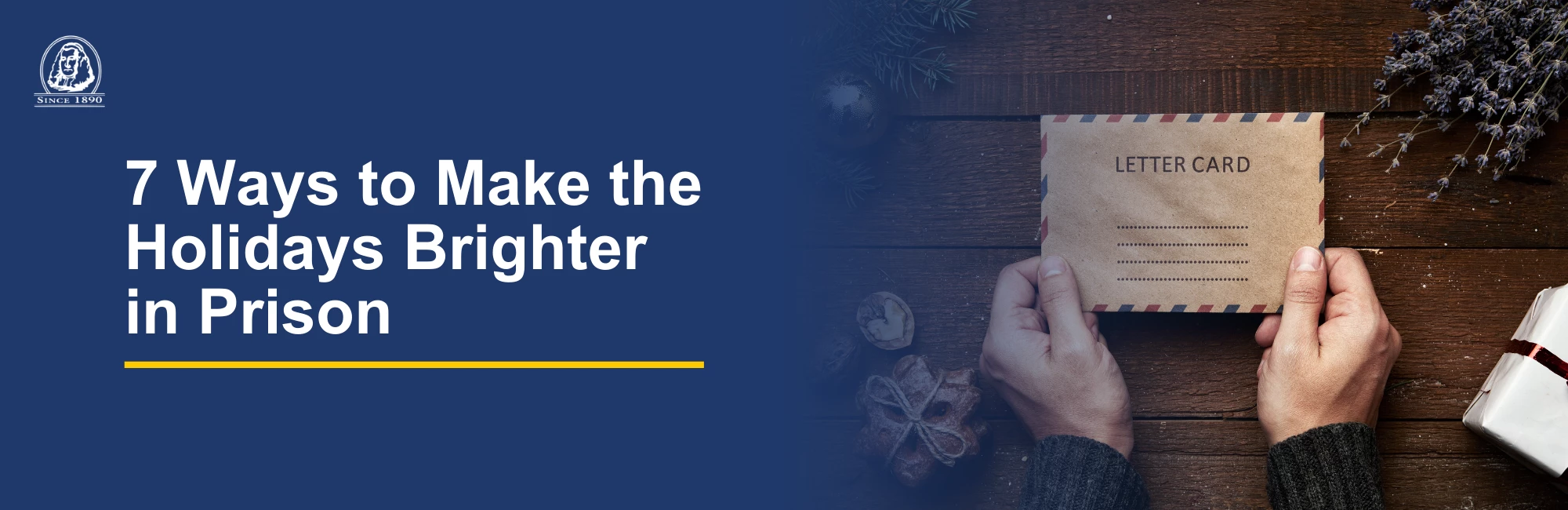
Pelipost’s guide “Holidays with an Incarcerated Loved One” shows that regular mail, simple updates, kids’ drawings, and snapshots of everyday life help loved ones feel included in family celebrations instead of erased from them.
Instead of sending one card for a holiday, consider short notes every week or a small “holiday countdown” of letters. Always check the facility’s rules first so that photos, ink colors, or decorative items aren’t rejected.
2. Share your holiday traditions in detail
Many people say the holidays hurt most because they can vividly imagine what they’re missing at home. You can’t remove that pain, but you can make them feel included rather than shut out.
In letters or calls, describe who came over, what everyone cooked, the funny disasters, the quiet moments, and any religious or cultural traditions your family keeps. Those details aren’t “rubbing it in.” They’re a reminder that they still belong to a family and are part of the story being written.
3. Help them build small traditions inside
Pelipost’s article “What Is It Like Spending Christmas in Prison?” describes people making snowflakes out of toilet paper, decorating windows with allowed materials, and planning commissary “potluck” meals.
You can encourage that creativity by suggesting activities like:
- A short reflection or prayer at the same time each day
- A gratitude list they add to all month
- A tiny celebration with trusted friends inside
Ask what’s possible where they are, and then brainstorm together. The goal is to give the season shape so it doesn’t feel like another block of time.
4. Prioritize calls and virtual visits when possible
Phone and video calls can be difficult, but hearing a familiar voice matters. Edovo’s blog post “A Different Kind of Holiday Season” notes that maintaining strong family connections is linked to lower recidivism, and even small gestures like calls, letters, or virtual visits support mental health and hope.
If possible, plan one or two calls around key dates and treat them as priorities on everyone’s calendar. Let kids share a joke, a song, or describe the decorations at home, or just spend some time showing your partner you care.
5. Encourage healthy coping
The holidays can amplify grief, regret, and mental health struggles. Edovo points out that many incarcerated people live with mental health challenges, and the season can intensify those feelings.
You don’t have to fix it, but you can normalize their mixed emotions instead of pushing nonstop positivity. Encourage them to use available tools, journaling, spiritual practices, peer support, or facility programs that focus on trauma, mindfulness, or emotional regulation. If their facility uses tablets or education platforms, they may have access to wellness content they can revisit whenever things feel heavy. It is important to not act like these feelings don’t exist, or you run the risk of making them feel more alienated.
6. Invest in their future with education
One way to bring hope into a bleak season is to focus on what comes next. Blackstone Career Institute offers a correspondence Paralegal Certificate Program designed specifically for people in prison. It uses soft-covered books, does not require internet access, and typically takes 12–14 months to complete, with a minimum four-month study period to support meaningful retention.
Education behind bars isn’t just about getting a job later. Blackstone highlights research showing that correctional education is associated with a 43% lower chance of returning to prison and better employment prospects after release, based on a large meta-analysis of correctional education programs. If you’re able, you can sponsor your loved one, or cheer on each lesson they finish.
7. Remind them that this holiday season is a chapter, not the whole story
Reflections and community stories both emphasize the same reality: holidays in prison are hard, but they still contain moments of kindness and connection.
Your role is not to pretend things are fine. It’s to keep pointing to a future beyond the walls, naming events you hope they’ll be home for, talking about goals they’re working toward now, and reminding them that your relationship is bigger than their worst mistake or hardest year.
You can’t make prison holidays “normal.” But through contact, honest conversations, shared traditions, and opportunities like education, you can help this season feel less empty—and hopefully give your loved one reasons to believe that better chapters are still coming.
Written by Colt Parris