

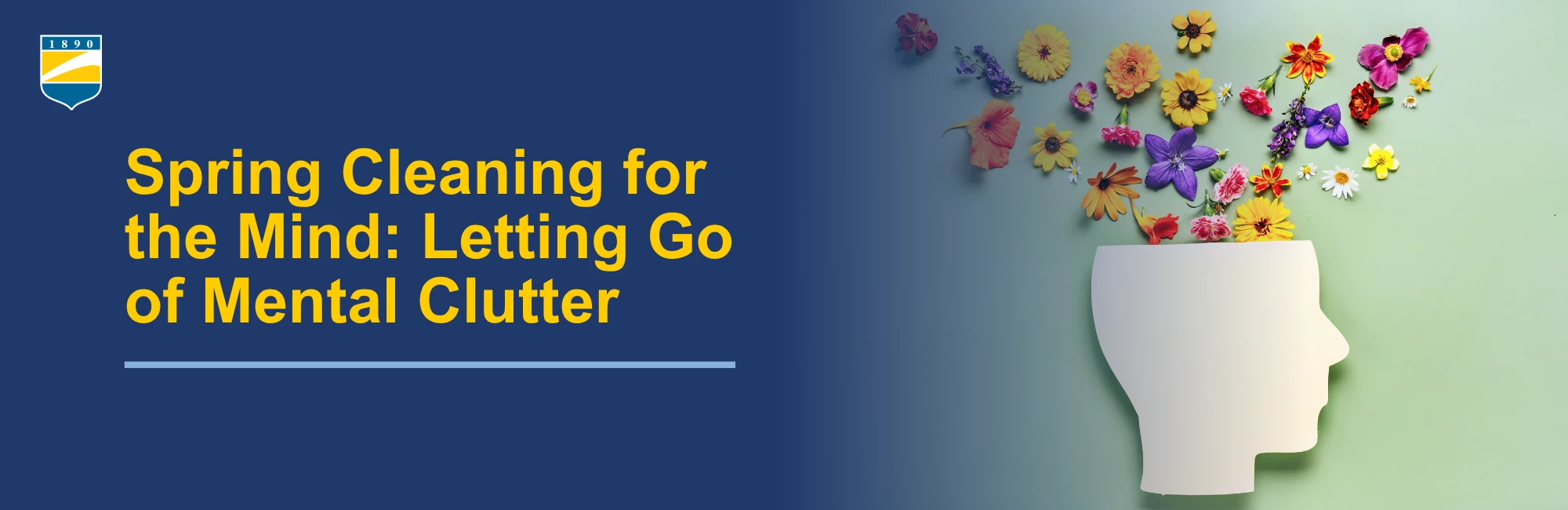
Spring Cleaning for the Mind: Letting Go of Mental Clutter
Spring is the season people associate with clearing out closets, opening windows, and getting rid of what has quietly piled up over time. The mind is not so different. Stress, distractions, unfinished decisions, repetitive worry, and digital overload can all build into mental clutter. When that happens, it becomes harder to focus, harder to rest, and harder to think clearly.
This is not just a metaphor. There is real brain science behind it. Research on neuroplasticity shows that the brain is capable of changing its structure, activity, and connections in response to experience and repeated behavior. In other words, the brain learns patterns, and then it gets better at repeating them. That applies to helpful habits, but it also applies to stress loops, rumination, and chronic distraction. The National Center for Biotechnology Information defines neuroplasticity as the nervous system’s ability to change its activity by reorganizing its structure, functions, or connections in response to internal or external stimuli.
That is why the idea of spring cleaning is useful for mental health. When people reduce mental clutter, they are not trying to erase difficult emotions or become perfectly calm. They are trying to create better conditions for the brain to function well. Attention, sleep, movement, and intentional routines can help shape healthier patterns with repeated practice and improve performance in other areas over time.
Why Mental Clutter Builds Up
The brain is designed to pay attention to what seems important, especially what feels uncertain, threatening, or unresolved. That tendency is useful for survival, but it also means stress can linger. The mind keeps returning to what feels unfinished. A tense conversation, an overloaded schedule, or a pile of notifications can keep mental energy tied up long after the moment has passed.
That is one reason mental clutter feels so exhausting. It is not made of one big crisis. More often, it comes from accumulation—too many open loops, too many inputs, too much task switching, and too little rest. Over time, this can affect attention, memory, and emotional regulation, especially when stress becomes chronic. Research published in Frontiers in Human Neuroscience notes that chronic stress is associated with changes that can affect learning, memory, and cognitive flexibility.
In spring, clutter is easier to see because light comes in and reveals what has been ignored. The same thing can happen mentally. Individuals may suddenly realize they are not just “busy” but are mentally bogged down. That is the moment when clearing mental clutter becomes a practical goal in order to improve other areas of life.
What Neuroplasticity Has to Do With It
Neuroplasticity matters because repeated experience changes the brain. When people spend day after day multitasking, doomscrolling, reacting to stress, and rehearsing the same thought patterns, those patterns become easier to fall into. The brain becomes more efficient at doing what it does often. This can be annoying, but it also can be convenient if the habit is useful.
The encouraging side of this is that healthier mental patterns can also be strengthened. Dr. Dan Siegel emphasize practices that support awareness, reflection, connection, rest, and focused attention. His Healthy Mind Platter describes seven daily mental activities that support optimal mental health, including focus time, play time, connecting time, physical time, and sleep time. Those ideas line up well with broader neuroscience findings that lifestyle and repeated mental activity influence the brain’s adaptability.
This means clearing mental clutter is not about one dramatic breakthrough. It is achieved through repeated small choices that tell the brain, over and over, what to prioritize. The process is less like flipping a switch and more like forging a pathway through tall grass. The first few times through are awkward. Eventually, the path gets easier to follow.
Brain-Based Ways to Clear Mental Clutter
The science of neuroplasticity suggests that small, repeated actions matter more than occasional heroic effort. To reduce mental clutter, it helps to focus on habits that reduce overload and strengthen clearer mental patterns.
- Train attention on purpose. Attention helps shape brain activity, so even short periods of mindful breathing, journaling, or quiet focus can interrupt scattered thinking and build more deliberate patterns over time. Dr. Dan Siegel’s materials on awareness and the Healthy Mind Platter support this idea.
- Reduce unnecessary input. Constant notifications, multitasking, and information overload increase cognitive strain. Cutting back on interruptions can reduce the amount of mental clutter the brain has to manage.
- Engage in movement regularly. A review in Nutrients found that exercise, diet, and sleep all influence neuroplasticity, with physical activity playing an important role in brain adaptability and cognitive function.
- Protect sleep. Sleep is deeply tied to memory and learning. A meta-analytic review found that sleep deprivation has a detrimental effect on memory for newly learned material, which helps explain why an overloaded mind often feels worse when rest is poor.
- Replace old loops with better ones. The goal is not just to remove mental clutter, but to build more useful defaults, such as reflection, single-task focus, movement, social connection, and consistent routines.
These steps are simple, but simple does not mean trivial. The brain responds to repetition. That is the whole game.
Daily Habits That Support a Clearer Mind
Many people wait until they feel completely overwhelmed before trying to reset. That seems to make sense, but it is backward. A clearer mind is usually built through daily maintenance rather than emergency repair.
The WebMD overview of neuroplasticity explains that the brain can adapt when people learn, practice, and encounter new experiences. The Mel Robbins Brain & Neuroscience page also centers on how daily practices affect focus, memory, and actions. Taken together with research-based reviews, the lesson is fairly plain: the brain is constantly adapting to what a person repeatedly does.
That means daily choices matter. A short walk matters. Turning off alerts matters. Going to bed on time matters. A few minutes of reflective breathing matter. None of these is glamorous. The brain, however, is not especially interested in glamour—it likes patterns.
Reducing mental clutter is therefore not only about “thinking better thoughts” but also about building conditions that make better thinking easier. That is a realistic and scientifically based way to approach change.
Conclusion
Spring cleaning for the mind is really about making space—space to focus, space to rest, space to respond instead of react, and space to stop carrying every unfinished thought at once.
The science of neuroplasticity offers a grounded reason for hope. The brain is not fixed. It changes in response to repeated experience, which means habits that reduce mental clutter can become more natural over time. Spring cleaning is a useful reminder that renewal is not magic. It is maintenance, repetition, and a willingness to clear out what no longer helps.
Written by Colt Parris