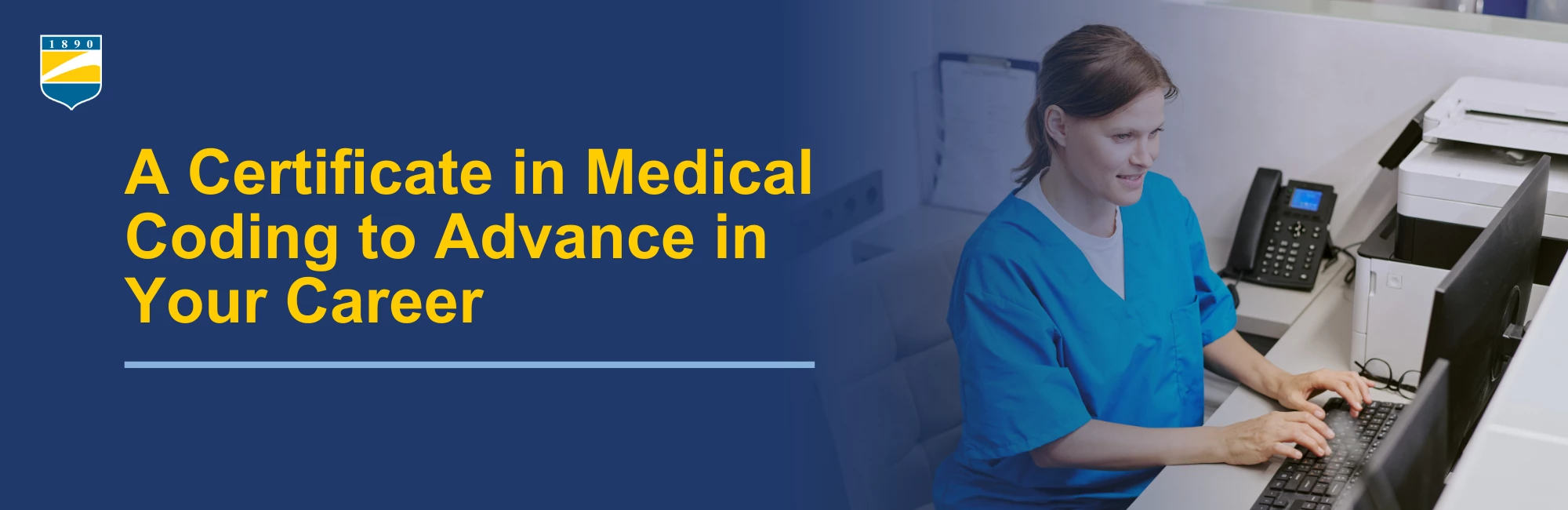

A Certificate in Medical Billing to Advance in Your Career
Careers do not always change with dramatic leaps. Most of the time, progress comes from strategic upgrades—a new skill, a new credential, or a clearer understanding of how your work fits into a larger system. For many healthcare professionals and office staff, a certificate in medical billing is exactly that kind of upgrade. It does not require leaving your job, uprooting your life, or starting from zero. It sharpens what you already do and turns experience into leverage.
Medical billing sits at the intersection of healthcare, finance, and compliance. It is how care turns into revenue, how practices stay open, and how patients avoid confusing or costly mistakes. According to the Occupational Outlook Handbook, medical records specialists, including billing professionals, are in demand. They play a growing role as healthcare systems become more complex and data driven. That complexity is exactly why a certificate in medical billing carries weight.
Why a Certificate in Medical Billing Matters
Many people working in healthcare already touch billing without realizing it. Front desk staff verify insurance. Medical assistants make sure coding is accurate. Office managers handle claims follow up. The difference between doing tasks and being recognized for them often comes down to credentials, which means a certificate in medical billing could signal formal training, accuracy, and accountability.
Employers care about this because billing errors are expensive. Denied claims cost practices time and money. Compliance mistakes can trigger audits and penalties. A professional with a certificate in medical billing brings structure to chaos. That can make you more valuable, more trusted, and harder to replace.
For the individual, the impact is practical. A certificate can strengthen your resume, justify a raise, or support a promotion. It can also give you confidence. Knowing the rules of coding, reimbursement, and insurance workflows removes guesswork.
Designed for Working Professionals
One of the biggest barriers to professional development is time. Traditional programs assume you can pause your life. Most people cannot. That is why online education has become the preferred path for adult learners. According to the National Center for Education Statistics, over 60 percent of postsecondary students now take at least one online course.
An online certificate in medical billing allows you to study around work, family, and real responsibilities. The online Medical Billing certificate course at Blackstone Career Institute is built for your reality. It is fully online, self-paced, and designed to fit into an existing career rather than disrupt it.
Affordability matters too. Career advancement should not come with crushing debt. Short-term certificate courses offer a lower-cost alternative to degrees while still delivering focused, job-relevant skills. This is especially important for professionals who already work in healthcare and simply need a recognized credential to move forward.
What You Actually Learn and Why It Sticks
A certificate in medical billing is not abstract theory. It is applied knowledge. You learn how medical services are translated into codes, how claims move through insurance systems, and how regulations affect reimbursement. You learn the language of payers, providers, and compliance.
This knowledge sticks because you can apply it immediately. Perhaps you will find yourself correcting errors at work, improving workflows, or catching issues you used to miss. That kind of immediate relevance can accelerate learning and build professional credibility fast.
It also helps to future-proof your career. Healthcare regulations change. Insurance models evolve. A formal foundation makes it easier to adapt. Instead of being overwhelmed by change, you can understand the framework behind it.
Who Should Consider This Path
A certificate in medical billing is especially useful for people who already work in healthcare or healthcare adjacent roles. Medical assistants, office managers, patient coordinators, and administrative staff may benefit. It is also valuable for professionals in billing support roles who want to formalize their experience.
If you are someone who likes organization, problem solving, and understanding systems, this field fits well. There is structure, but also constant variation. No two claims are the same. That keeps the work engaging, and yes, occasionally frustrating in a character-building way.
Beyond Advancement, a Door to Change
While a certificate in medical billing is ideal for advancing in a current role, some people discover they want more. They want to fully transition into medical billing and coding as a career. That path usually requires broader training, especially for those without prior experience.
For individuals looking to make that shift, the online Medical Billing and Coding Program at Blackstone Career Institute is a strong next step. It is designed for career changers and covers both billing and coding in depth. This option makes sense if you want to enter the field directly rather than build on an existing healthcare role. Additionally, the program is designed to prepare students to pursue a professional certification in coding.
A Strategic Move, Not a Gamble
Career growth does not have to be risky. A certificate in medical billing is a calculated investment in yourself. The Medical Billing certificate course can build on what you already know, fit into your busy lifestyle, and deliver skills that employers actively need. In a healthcare system that runs on accuracy and accountability, that is not a small thing.
The real value is what the certificate represents—initiative, competence, and the quiet confidence that comes from knowing how the system actually works. That confidence tends to show up in interviews, evaluations, and opportunities.
In a world full of loud career advice, this is a quieter move. Sometimes the smartest step forward is not a leap but a well-aimed step.
Written by Colt Parris