
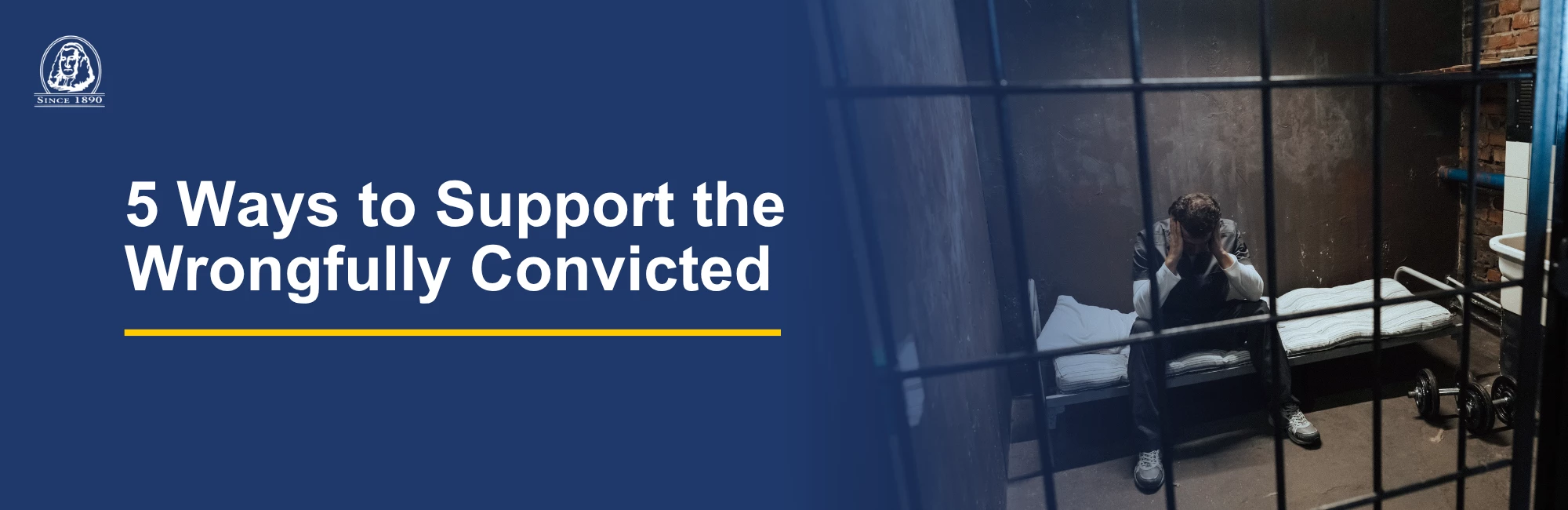
5 Ways to Support the Wrongfully Convicted
Police cars pull up to the curb, and you stare out the window at school, wondering what’s going on and why they are here. Soon your name is being called and you make your way down to the office only to be greeted by one of those officers in uniform. You know you didn’t do anything wrong, but it doesn’t matter. You’re whisked away to prison and spend decades behind bars, where each day makes freedom appear more distant. Hope wanes.
Until, you discover people in your corner, prepared to defend you and advocate for your release. But when victory does come, you step into a whole new world—one where people walk around with handheld phones and use voice-activated Google devices in their homes.
This was the situation for Frankie Benitez and Troyshown McCoy who were teenagers in school when they were arrested in Chicago for crimes they didn’t commit. After decades of wrongful imprisonment, lawyers were able to use new fingerprint evidence to bring about their release.
Frankie Benitez describes the surreal experience of being released and trying to navigate a world that had progressed with technology while he was behind bars. Troyshown McCoy remembers what it was like to step back into the world while feeling like he had been dropped into chaos because of how different life had been in prison.
This is just one story among hundreds of those who have been wrongfully convicted and have had to experience life behind bars. Upon release, many must navigate a different society than the one they used to be part of.
Being wrongfully convicted can stem from a variety of scenarios, including coerced confessions, eyewitness misidentification, fabricated evidence, and even corrupt detectives. With new, emerging state-of-the-art technologies and passionate lawyers who are working with wrongfully convicted individuals, some are thankfully experiencing freedom away from prison bars. However, the re-entry process is not easy, and the lost time behind bars can never be regained.
There are ways you can help limit these stories from being the norm by getting involved in supporting the wrongfully convicted.
Raising Awareness/Advocacy
Speaking up is the first step toward creating change. If people do not sound the alarm and open the door for others to understand the problem, a resolution will not come. Doing research, asking questions, and listening to reputable sources will help you understand the problem and need, while giving you the confidence to be part of the solution.
Supporting Re-entry
Equipping wrongfully convicted individuals with the knowledge and tools they need coming out of prison is necessary from a logistical and compassionate perspective. For some, technology has evolved since their incarceration, and they now need to navigate these changes. You can make a difference and help share resources. One organization at the forefront of helping the wrongfully incarcerated is the Innocence Project, who has a social work department that works closely with their clients on re-entry into society.
Donating
Consider giving to support those who have been wrongfully convicted. There are countless organizations that work to free the wrongfully convicted and have a team of trained employees who are on the front lines.
Here are a few organizations you can donate to as they work to raise awareness, engage in advocacy, and create a more equitable justice system, both with wrongful convictions and other issues in the justice system.
- The Innocence Project’s goal is to prevent wrongful convictions and work with wrongfully incarcerated individuals to build a case to free them. They want to see an equitable and compassionate justice system.
- Prison Fellowship exists to point incarcerated individuals toward life transformation and advocate for justice and human dignity. They want to see restoration and hope impact someone’s life even before they are released from prison. The organization also advocates for policy changes to lessen wrongful convictions.
- Prison Policy Initiative is a non-profit, non-partisan organization that focuses time and efforts on research to bring public awareness to the harm of mass criminalization and invite supporters to lead the charge in an equitable and fair justice system.,
- The Exoneration Project works to free the wrongfully convicted, and to date, they have helped over 200 clients find freedom outside of prison. Once individuals are given back their freedom, the Exoneration Project ensures these people have the resources needed to re-enter society with success.
Volunteering
Even if you are unable to give financially, you can give of your time by volunteering with a local organization that is working to assist those who have been wrongfully convicted. By rolling up your sleeves, you are showing these individuals that they are seen, they matter, and there can be hope for the future.
Purchasing Goods
A simple way to encourage conversation and raise awareness is purchasing apparel, such as clothing and accessories, like tote bags, ball caps, and stickers. Not only does it add a new addition to your wardrobe, but it opens avenues to talk with others about supporting wrongfully incarcerated individuals.
Blackstone Career Institute (BCI) is here to walk alongside incarcerated individuals and their families. One way BCI may help is through an educational certificate program that can provide people with skills for meaningful work upon release.
The correspondence Paralegal/Legal Assistant Certificate Program gives an overview of the justice system and teaches foundational paralegal skills. Throughout the program, individuals will learn legal terminology, the process of criminal procedure, how to conduct legal research, and ethics related to paralegal work.
Education can assist the wrongfully convicted with knowledge about the legal system and either prepare them for life after they are released or shed light on information that can be applied to their specific case.
As a sponsor, you can make a difference in someone’s life by covering the tuition for a loved one who is incarcerated.
To learn more about the Paralegal Certificate Program and how to sponsor your incarcerated friend or loved one, connect with an admissions advisor who will walk you through the enrollment process by calling 800-826-9228 or booking an appointment today.
Together, we can make a difference in the lives of those who have been wrongfully convicted and remind them they do not stand alone.
Written by Laura Conaway