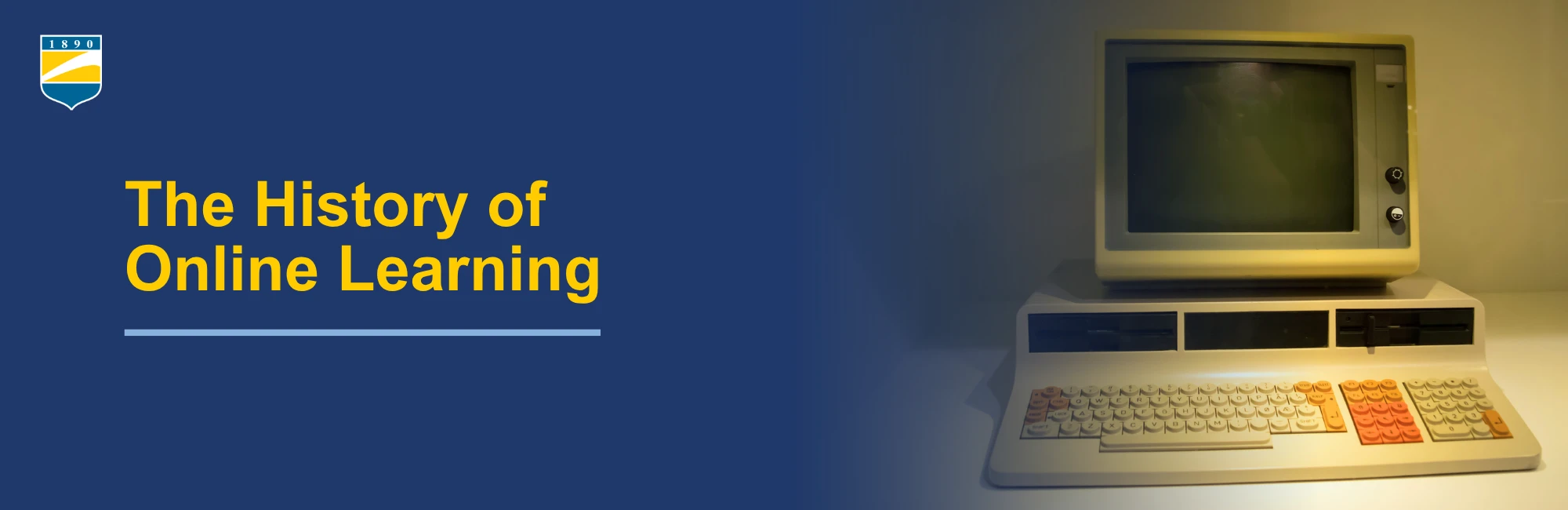
The History of Online Learning
Online learning may feel like a modern invention, but the idea behind it has existed for generations. Long before students could log in to a course portal, watch lectures online, or submit assignments electronically, people were looking for ways to learn outside a traditional classroom. The history of online learning is really part of a much longer history of distance education, correspondence courses, and flexible learning options for students who needed another path.
Today, online learning is common in higher education, career training, and professional development. However, its growth did not happen all at once. It developed gradually as technology changed how students and schools could communicate.
Early Distance Education
Before online learning, there was correspondence education. In the 19th century, students could take courses by mail, receiving lessons, completing assignments, and sending work back to instructors for review. This model made education more accessible to people who could not attend classes in person because of work, location, family responsibilities, or other barriers.
Correspondence education helped establish an important idea: students did not always need to be physically present in a classroom to learn. According to the National Center for Education Statistics, distance education has become a major part of modern postsecondary education, but its roots go back much further than today’s digital platforms.
This early form of distance learning was slower than today’s online learning, but it served a similar purpose. It gave students more flexibility and allowed schools to reach learners beyond a local campus.
Blackstone’s Place in Distance Education
Blackstone Career Institute has its own long history within this tradition. The school was founded in 1890 as a school of law and became one of the oldest correspondence schools in the nation. At a time when many students had limited access to formal legal education, correspondence study offered a practical way to build knowledge from home.
This history matters because online learning did not appear out of nowhere. Institutions like Blackstone helped shape the path from mailed lessons to modern digital coursework. The format has changed over time, but the purpose has remained consistent: helping adult learners access career-focused education in a flexible way.
For many students, this flexibility is still one of the main benefits of online learning. Whether they are working full-time, caring for family members, changing careers, or returning to school after time away, online programs can make education more manageable.
Radio, Television, and Educational Technology
As communication technology advanced, distance education expanded beyond the mail. Radio and television created new ways to deliver lessons to students who were not in a traditional classroom. Educational broadcasts, recorded lectures, and video-based instruction helped schools experiment with new formats.
These tools were not the same as online learning, but they helped move education toward more flexible delivery. Students could receive various forms of instruction from a distance, and schools could begin thinking creatively beyond the limits of a physical classroom.
By the late 20th century, computers began changing education again. As personal computers became more common, schools started using digital tools for assignments, training, and communication. Eventually, the internet made it possible for students and instructors to interact more quickly and consistently.
The Rise of Online Learning
The growth of the internet transformed distance education. Instead of waiting for assignments to arrive by mail, students could access course materials online, communicate with instructors by email, and submit work electronically.
Online learning also made it easier for schools to organize courses in one place. Learning management systems gave students access to lessons, grades, assignments, resources, and communication tools. This helped create a more structured online classroom experience.
As technology improved, online learning became more interactive. Courses could include videos, quizzes, digital textbooks, simulations, and discussion forums. Students could often study on their own schedules while still following deadlines and course requirements.
Online learning also became especially important for adult learners, since many adults need education that fits around work, family, and other responsibilities. Online programs started providing that flexibility while still helping students prepare for specific careers.
Online Learning in Recent Years
In recent years, online learning has become a major part of education. The National Center for Education Statistics reports that millions of postsecondary students enroll in distance education courses, showing how widely this format is now used.
The COVID-19 pandemic also accelerated public awareness of online learning. Schools, colleges, and training programs had to rely heavily on remote instruction, and many students became more familiar with digital learning tools. While emergency remote learning was not always the same as a carefully designed online course, it showed how important flexible education options had become.
Since then, many students have continued to look for online programs that offer convenience, structure, and career relevance. Online learning can be especially useful for students who want to build job skills without relocating, commuting, or pausing their current responsibilities.
The Future of Online Learning
Online learning will likely continue to evolve as technology changes. Artificial intelligence, virtual simulations, mobile learning, and interactive course platforms may all shape how students learn in the future. However, the central goal will remain familiar: making education accessible, practical, and useful.
The history of online learning is not only a story about technology. It is also a story about students who needed options and institutions that found new ways to deliver education. Blackstone’s long history in correspondence and distance education reflects that tradition.
As more students look for flexible ways to gain career skills, online learning will continue to play an important role in education. Its history shows that while the tools may change, the need for flexible learning remains the same.
Written by Adam Wernham