Choosing a Pathway: Medical Office Assistants
Medical office assistants are detail-oriented people responsible for performing a variety of office duties that smooth the medical processes in practices, clinics, and hospitals. These assistants work in a variety of places, including hospitals, private practices, and medical clinics.
According to the Occupational Outlook Handbook, medical assistants usually have some type of postsecondary education, like a certificate, and the field is expected to grow by 12% from 2024-2034. When selecting a medical assistant program, it is important to understand that there are two primary employment options. These include administrative medical assistant and clinical medical assistant. Both are important positions in this field, but they perform two entirely different tasks. Determine if becoming a medical office assistant (also known as an administrative medical assistant) is the right path for you.
Administrative Medical Assistant
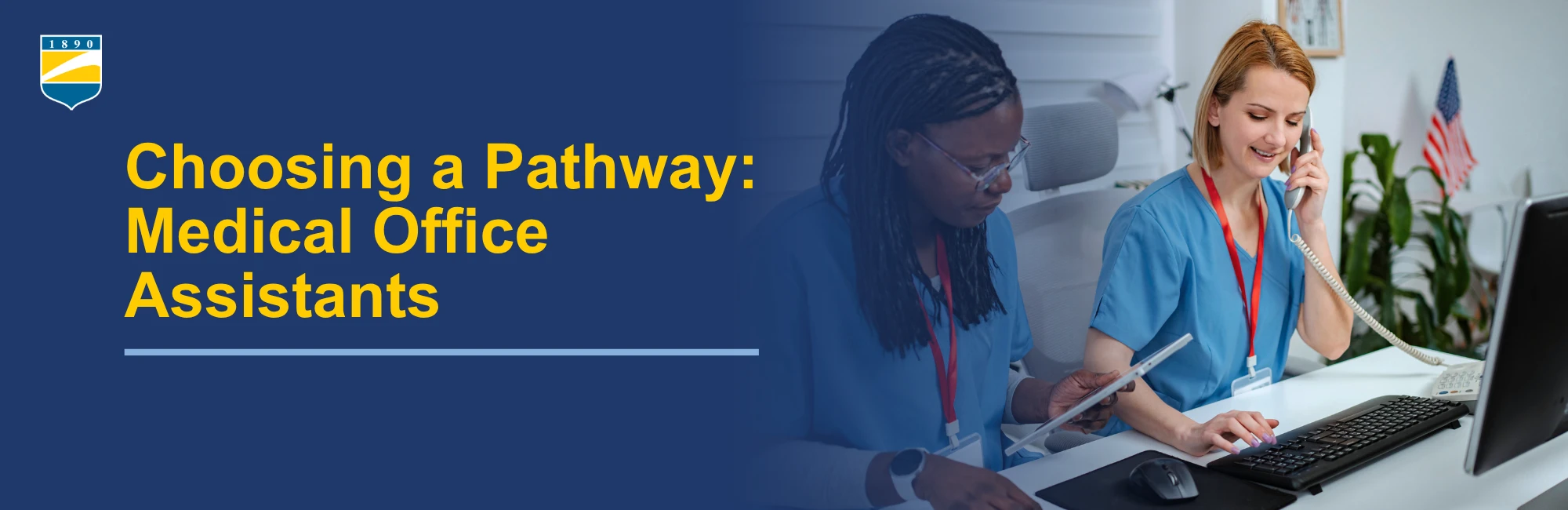
Administrative medical assistants, also known as medical secretaries, perform administrative functions for a hospital or clinic using their knowledge of medical terminology and applications. They can work under other common job titles, such as unit secretary, patient coordinator, and admissions coordinator.
This is a unique role, as it combines both direct and indirect patient care. Some of the responsibilities for administrative medical assistants include: checking patients in at the front desk, answering the phone, scheduling appointments, reviewing case history and compiling medical records, processing insurance payments, and maintaining supplies and appearance of the office.
To excel in the field, there are some important skills that a professional should develop. The top technical skills for administrative medical assistants include:
- Scheduling
- Appointment Setting
- Customer Service
- Medical Terminology
- Recordkeeping
- Billing
- Data Entry
National certification can offer an advantage over other applicants.
Clinical Medical Assistant
If you opt to pursue the clinical medical assistant career path, expect an emphasis on patient contact. Clinical medical assistants act as supportive staff alongside healthcare workers, both educating and caring for patients. Due to the fast-paced nature of the health industry, clinical medical assistants are crucial to the daily operations of medical facilities.
Regular clinical medical assistant responsibilities include:
- Noting patient history and personal information
- Helping doctors with patient exams
- Measuring vital signs
- Sterilizing medical instruments
- Scheduling patient appointments
- Preparing samples for lab tests
In general, a clinical medical assistant, unlike an administrative medical assistant, focuses on direct patient care, assisting physicians in both the office and the exam room. Their wide range of duties vary, depending on the location, specialty, and size of the practice.
Certification
According to the National Healthcare Association (NHA), 84% of employers of medical office assistants require or recommend certification. Certification helps demonstrate medical knowledge and administrative skills—two important points that help both gain respect and maintain job security.
Certification also can increase your employability and job options. It helps demonstrate your dedication in providing quality care and promotes workplace excellence. In the state of Washington, a credential is required if you are medical assisting.
The Blackstone Difference
Medical office assistant training from Blackstone Career Institute offers you the quality education needed to prepare for a fulfilling career in this flexible and highly popular employment field. Our online Medical Office Assistant Program offers both knowledge of administrative skills and medical terminology, including access to the NHA’s MA Skillsbuilder™: Administrative platform for an interactive learning experience.
The Medical Office Assistant Program is designed to prepare graduates for entry-level employment as a medical office assistant. Also, the program qualifies graduates to sit for the Certified Medical Administrative Assistant (CMAA) exam offered through the NHA.
For individuals working in the allied health field, Blackstone Career Institute also offers certificate training courses. Medical Office Procedures is a certificate course that explains the basics of managing the front office of a medical practice, clinic, or other healthcare setting. You will learn about legal and ethical issues, professionalism, communications, and common office procedures.
The Anatomy, Medical Terminology, and HIPAA certificate course is essential training for new starts in the healthcare field, or allied health workers that need a refresher. The course covers the terminology encountered in various medical fields, including body systems, related diseases, procedures, and abbreviations.