
How Reflection Can Support Personal Growth in Prison
Life in prison often means following a strict routine with limited control over how each day unfolds. Finding time to think about your experiences, choices, and goals can help make that time more meaningful. Reflection offers a way to learn from the past, make sense of the present, and think about the future.
Reflection doesn’t have to involve hours of writing or deep analysis. It can be as simple as spending a few minutes thinking about the day or writing down something that’s been on your mind. Over time, this habit can help build self-awareness, support personal growth, and provide a sense of direction.
Use Journaling to Sort Through Your Thoughts
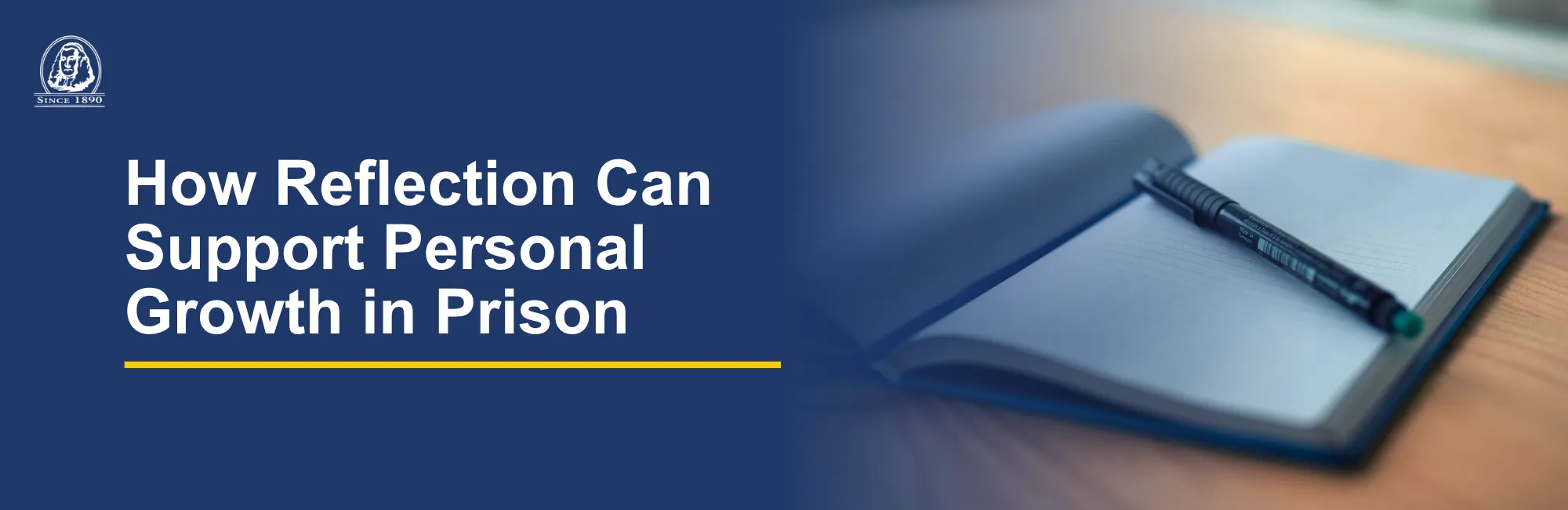
A journal offers a place to write honestly about what’s happening in your life. You can record your feelings, describe difficult experiences, or write about something you’re looking forward to. There’s no need to worry about grammar or making every entry sound good. The goal is to get your thoughts onto the page.
Research on expressive writing suggests that putting difficult experiences into words can help people process their thoughts and emotions. Writing can also help you recognize feelings that are hard to identify in the moment.
If you don’t know where to start, write about what’s been on your mind lately. You might be surprised by what comes up when you give yourself time to think without distractions.
Learn From the Past
Reflection can help you look back on past experiences and consider what you’ve learned from them. This might mean thinking about decisions that led to incarceration, examining patterns in relationships, or recognizing how certain reactions have affected other people.
The point isn’t to dwell on mistakes or punish yourself for things you can’t change. It’s to understand what happened and decide what you want to do differently.
Try asking yourself a few questions:
- What would I handle differently if I could go back?
- What situations tend to bring out the worst in me?
- What have I learned about myself?
- What kind of person do I want to be moving forward?
These questions can help turn difficult experiences into opportunities for growth. Reflection can also bring up painful memories, though, and you don’t have to work through everything on your own. If writing leaves you feeling overwhelmed, consider speaking with a counselor or a trusted friend, if possible.
Pay Attention to the Present
You don’t have to revisit the past every time you reflect. Sometimes it’s more useful to look at what happened today.
Before bed, think about how you spent your time, how you handled challenges, and what went well. Maybe you stayed calm during a frustrating situation, made progress in a class, or had a positive conversation with someone. You can also acknowledge when a day was difficult without treating it as a failure.
Advice on healthy daily habits in prison includes taking time to reflect on the day and consider what could be improved.
A few minutes of reflection can help you notice patterns. You might realize that certain situations consistently frustrate you or that reading, exercise, or talking with someone helps you manage stress. Once you recognize those patterns, you can start deciding what changes might help.
Think About the Future
It’s easy to focus on just getting through the day when the future feels uncertain. Still, making time to think about what comes next can give you something to work toward.
Write about what you’d like your life to look like after release. Consider your relationships, education, career, and personal goals. What skills would you like to develop? What habits would you like to leave behind? What kind of relationships do you want to build?
You don’t need to have every detail figured out. Start with one or two realistic goals, such as completing a course, improving your communication skills, or learning more about a career that interests you. You can adjust your plans as circumstances change.
Thinking about the future can also mean imagining the person you want to become, not just the things you want to accomplish.
Make Reflection Part of Your Routine
Reflection works best when it becomes a manageable habit rather than another task to complete. Try writing for five minutes a day and setting aside time once a week to look back on your progress. If you don’t have access to a journal, you can reflect quietly or talk through your thoughts with someone you trust.
You might also try creative writing. Poetry, stories, and letters can offer different ways to explore your experiences. A review of creative writing programs in prison describes opportunities for self-expression, reflection, and identity development through writing, while noting that more research is needed to establish the effectiveness of these programs.
Don’t expect every session to lead to a breakthrough. Some days, you may have very little to write. Other days, you may recognize something important about yourself.
The value of reflection comes from returning to it over time. By learning from past experiences, paying attention to your choices today, and setting goals for tomorrow, you can keep working toward personal growth even while incarcerated. You can’t change everything about your circumstances, but you can continue learning about yourself and deciding what you want to do next.
Written by Adam Wernham